目次 [閉じる]
- 1 Learning the “Skills and Spirit” of Japanese Craftsmanship through Making
- 2 Original Decoration with Colorful Japanese-pattern Origami
- 3 Featured Videos: Spring-Powered Karakuri Cars
- 4 Introducing Kobe’s Traditional Karakuri: “Kobe Dolls”
- 5 Sharing and Presentation Session
- 6 Sharing and Presenting the Finished Works
- 7 Group Photo, Smiles, and Hopes for the Next Workshop
- 8 Participants’ Countries and Numbers
- 9 Event Overview
【Event Report】Karakuri Craft Workshop – Experiencing Japanese Culture through Karakuri Dolls
Karakuri Craft Workshop (2025/12/6)
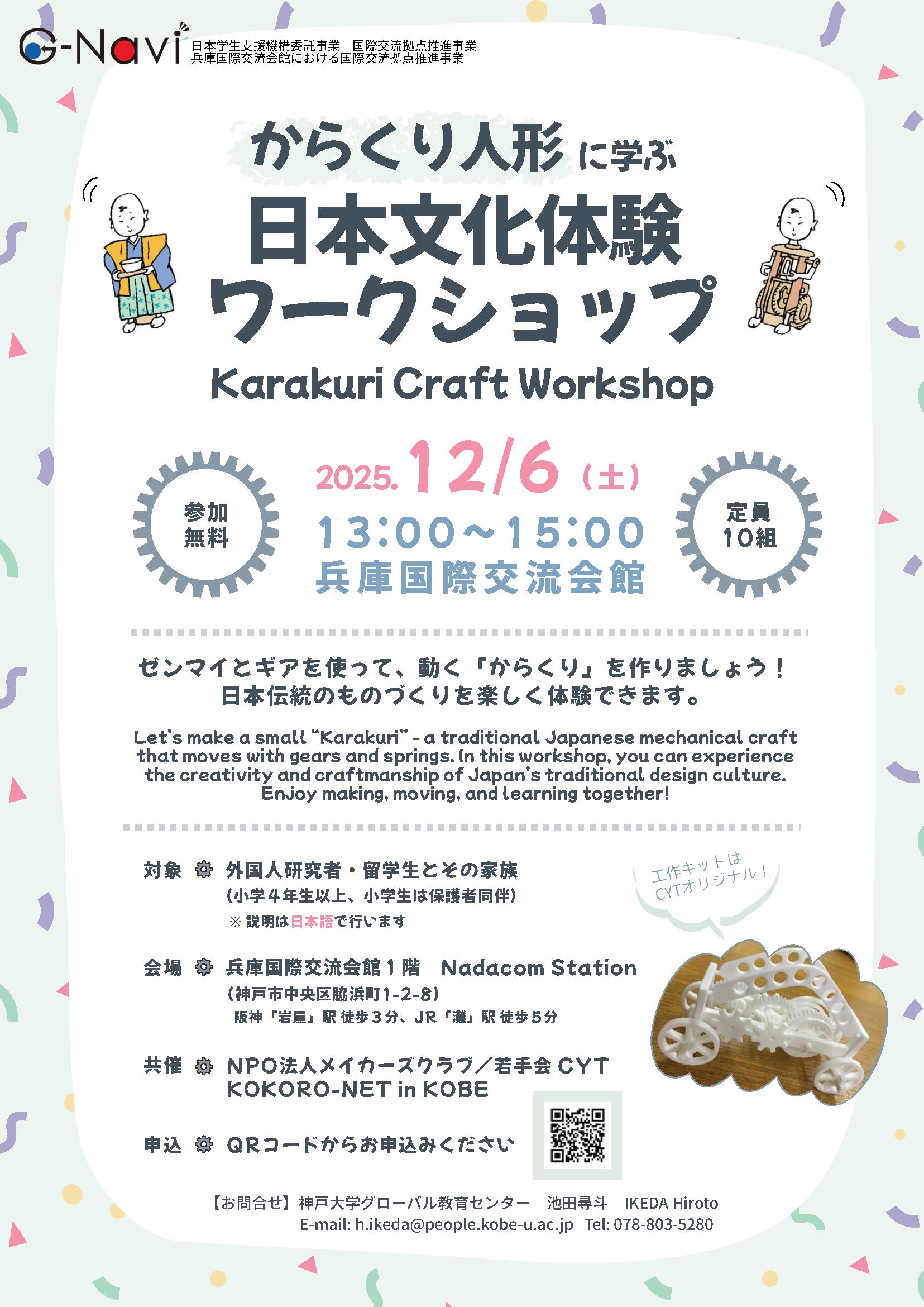
On December 6, 2025, the “Karakuri Craft Workshop – Experiencing Japanese Culture through Karakuri Dolls”
was held at the Hyogo International House in Kobe.
This program was co-hosted as a cultural exchange initiative in collaboration with KOKORO-NET in KOBE,
and was carried out with the support of the Kobe University Global Education Center.
The workshop was led by the youth group CYT of the NPO Makers Club,
who developed the teaching kits, facilitated the hands-on activities,
and provided craft support for all participants.
In total, 14 participants from 9 countries (including 4 children) joined the workshop, making it a very international gathering.
Learning the “Skills and Spirit” of Japanese Craftsmanship through Making
At the beginning of the program, Ms. Seguchi from KOKORO-NET in KOBE gave an opening address,
speaking about the significance of people from diverse cultures coming together and enjoying interactions through hands-on making.
Introduction of CYT – Makers Club Youth Group
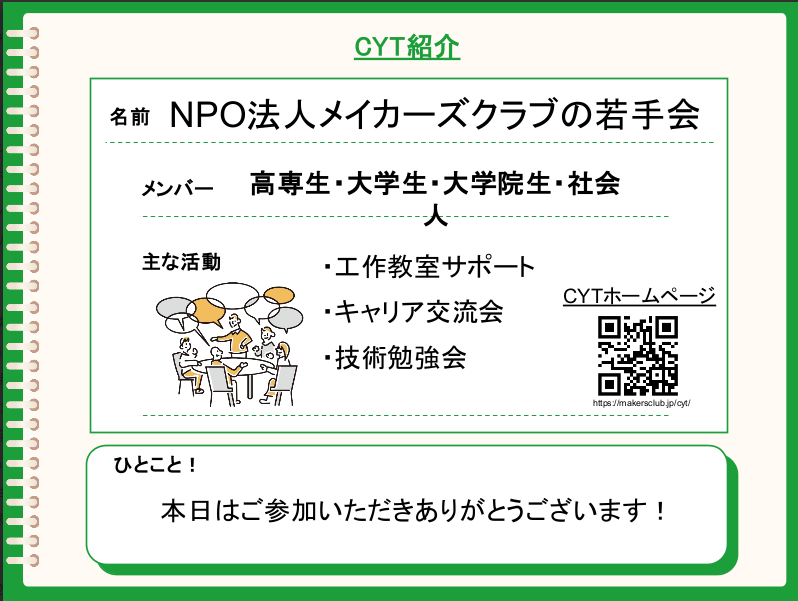 At the start of the workshop, Ms. Yabu, who coordinated this CYT project,gave an introduction to the youth group CYT.
CYT is a team of college of technology students, university students, graduate students, and young professionals belonging to the NPO Makers Club. They develop teaching kits, support craft workshops, organize technical study sessions, and hold career networking events.The group continuously practices the idea of “removing the boundary between teaching and learning,
creating together, and learning from one another.”
Self-introductions of the Craft Supporters
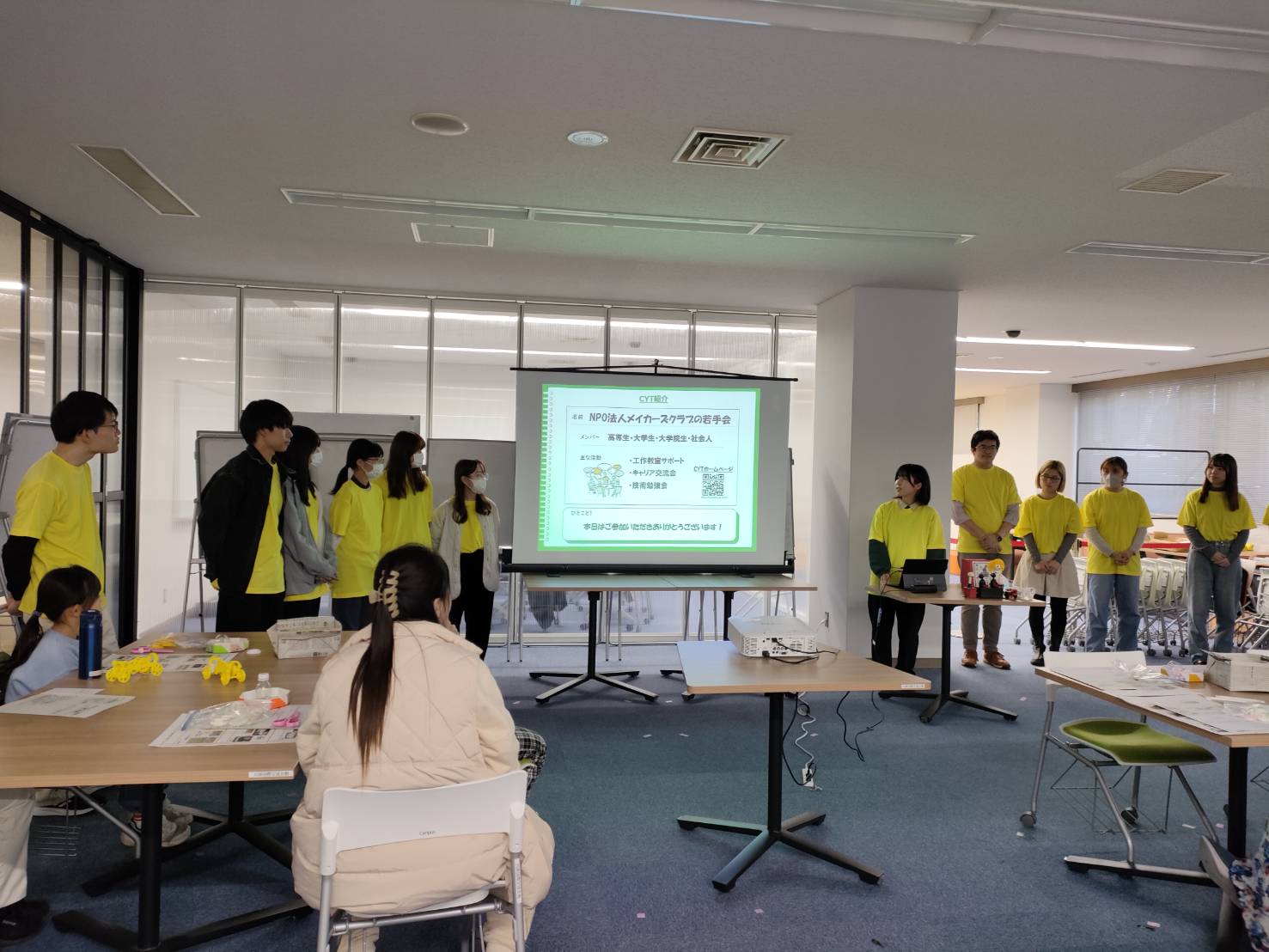
After that, 15 craft supporters – college of technology students, university students, graduate students, and young professionals – introduced themselves.
They spoke about their favorite Japanese foods and pastimes such as takoyaki and kendama, as well as their favorite places in Japan, which quickly created a friendly atmosphere and shortened the distance between supporters and participants.One member even demonstrated advanced kendama tricks, a traditional Japanese toy, prompting exclamations of “Wow!” and applause from the audience. As the self-introductions progressed, everyone in the room began to feel connected as companions who would enjoy “making” together, beyond differences of country or background.
Teaching Material Development and Craft Support by CYT
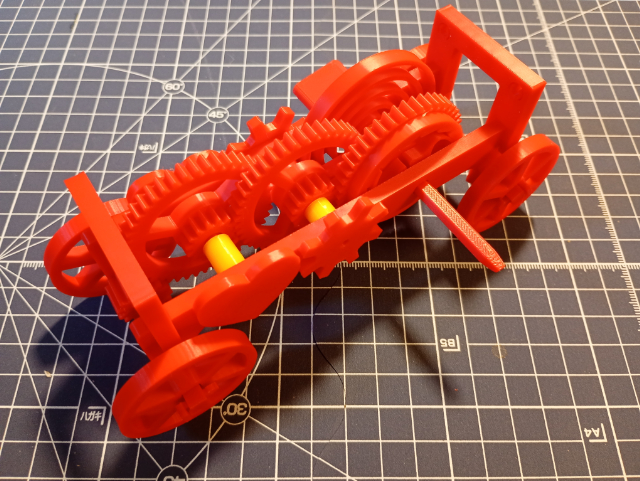
For this workshop, the craft supporters used a kit developed by CYT: a moving car that uses the same mechanism as one of Japan’s traditional karakuri dolls, the “tea-serving doll.” CYT’s 15 supporters assisted participants using this kit. With support provided in an almost one-to-one manner, participants from various countries were able to experience Japanese making safely and enjoyably.
[Japanese Culture Lecture] From “Secret Techniques” to “Shared Knowledge” – A Turning Point in Karakuri Technology
Makers Club representative Keiko Nakatani gave a talk titled “Japanese Karakuri Technology and the ‘Kikou Zui’: The KOKORO of Japanese Craftsmanship”.
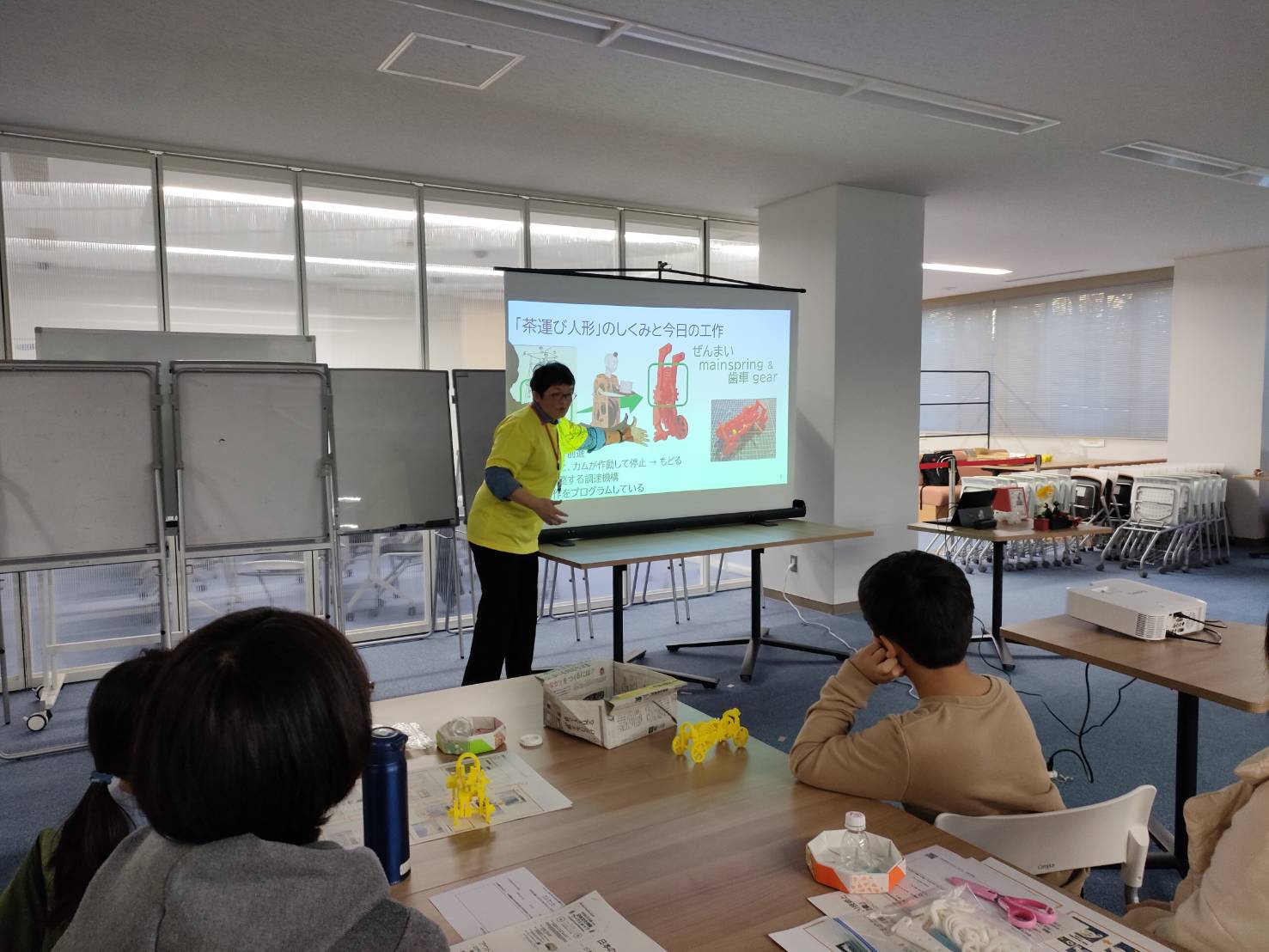
She explained how, in the Edo period, Hosokawa Hanzo Yorinaga published design drawings of mechanisms such as gears and mainsprings in the book “Kikou Zui.” By making these designs public, technology shifted from being guarded as secret knowledge to becoming part of a “culture of shared learning.” On the basis of this open knowledge, engineers such as Benki Oono and Hisashige Tanaka (founder of Toshiba) were able to grow and create their own innovations.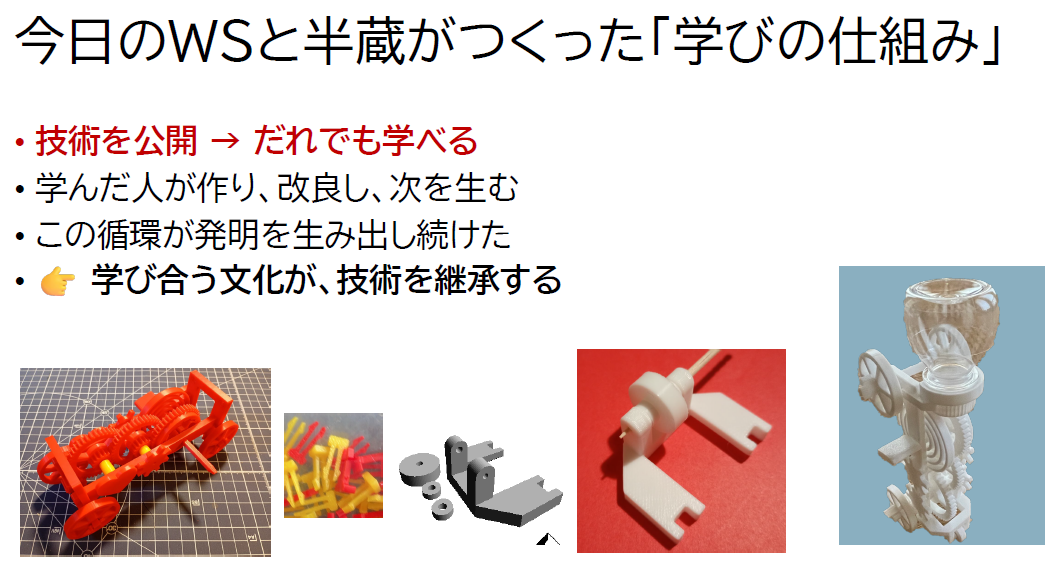 Through this lecture, participants learned that the day’s craft activity was not just about “making a product,” but about experiencing a culture in which technology is shared and passed on – something they could feel with their own KOKORO.
Hands-on Making: Cars Driven by Gears and a Mainspring
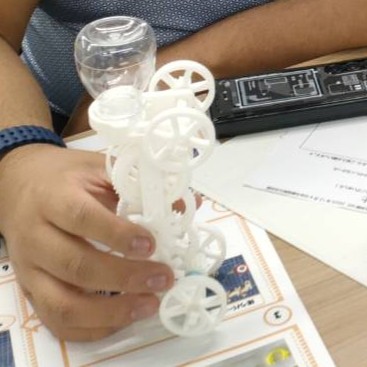
In the craft session, participants used the CYT-developed kit to build a moving car with the same mechanism as the traditional “tea-serving doll.”
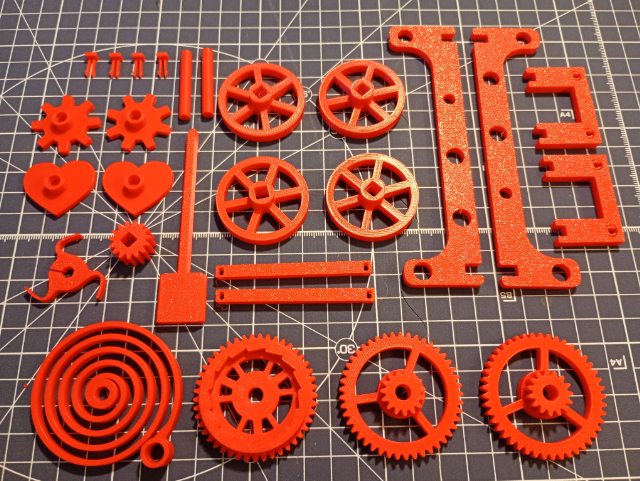
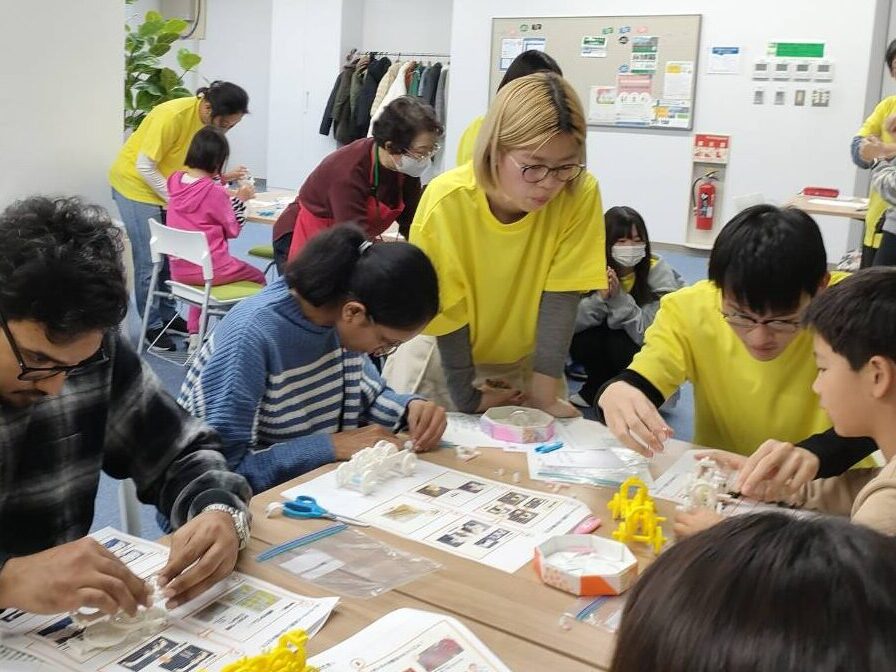
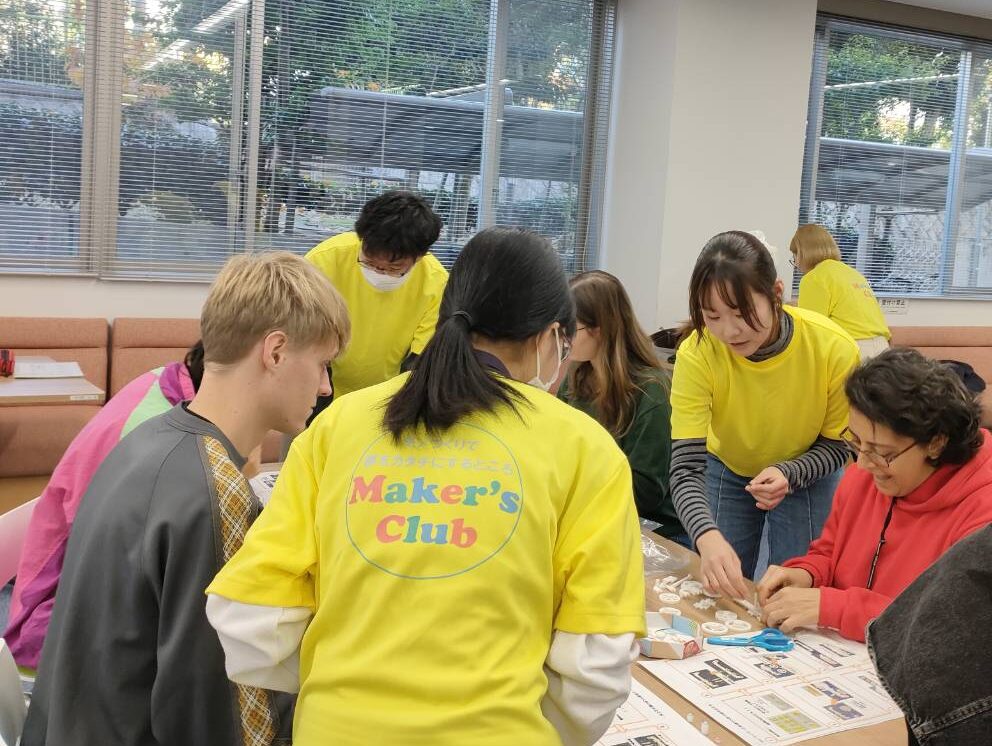
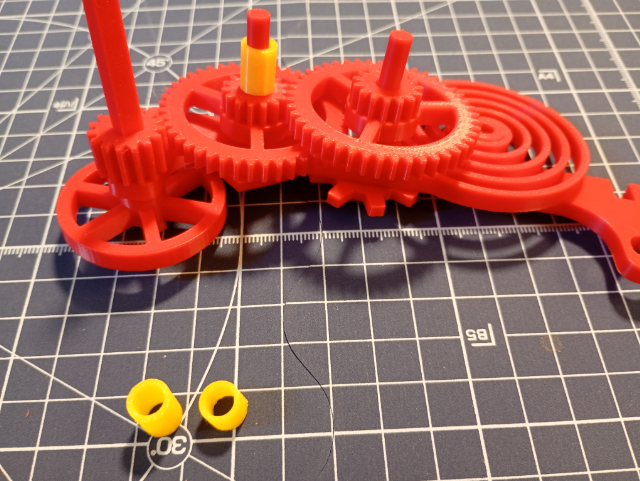 CYT supporters joined each table and provided almost one-to-one support as participants assembled cars driven by gears and a mainspring.
The explanations were given mainly in Japanese, but with gestures and visual support, participants cooperated across language barriers and worked together successfully.
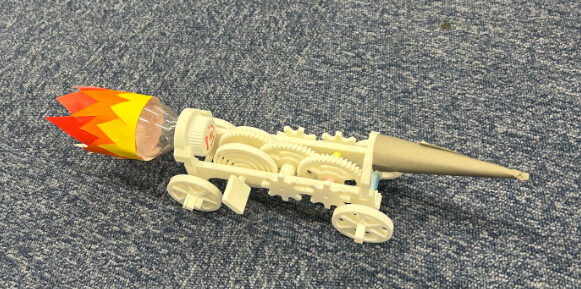
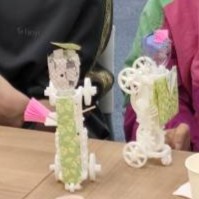
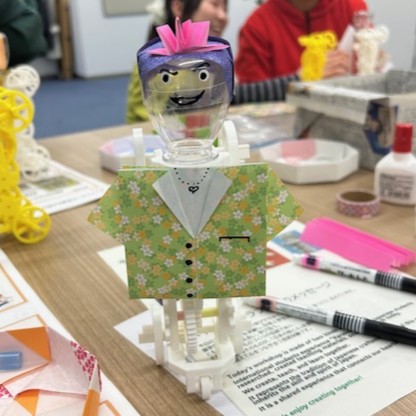
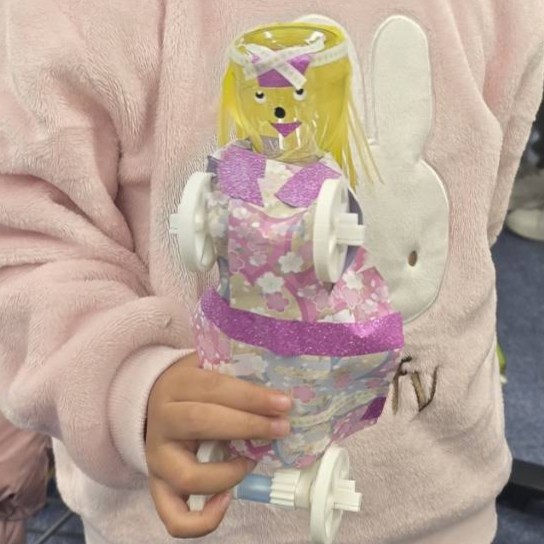
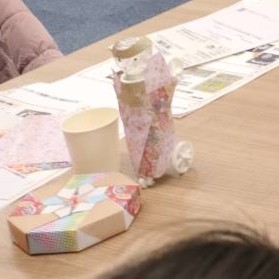
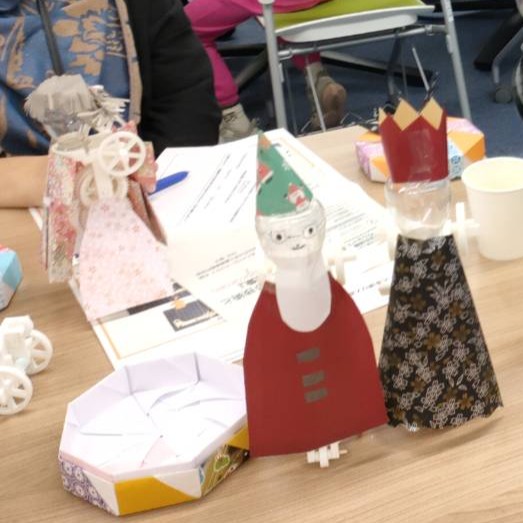
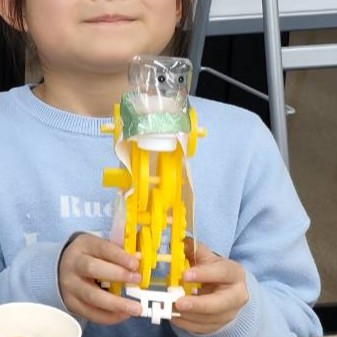
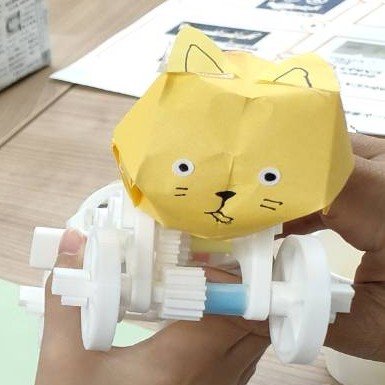
After assembly, participants tested how their cars ran and then decorated them with Japanese paper and origami. Many unique ideas emerged: for example, a mouse-shaped supercar powered by flames, and cars turned into platforms for dolls inspired by the tea-serving karakuri. In the end, each participant created a truly one-of-a-kind car.
Original Decoration with Colorful Japanese-pattern Origami
In the second half of the craft session, participants enjoyed decorating their cars using colorful Japanese-pattern origami and other materials prepared by KOKORO-NET in KOBE.
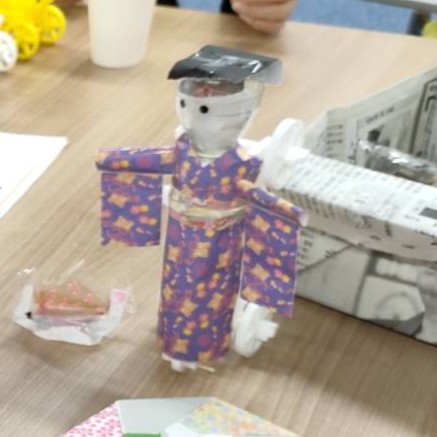 At each table, participants discussed ideas such as “I want it to look like a beautiful kimono” or “I’ll make a cute cat,” while choosing combinations of colors and patterns. It became a time for naturally sharing ideas and talking about文化 through design.
Because the materials were well prepared, participants could expand their own ideas freely, and both making and conversation progressed at the same time. This created a shared cultural experience unique to hands-on craft activities, deepening interest in Japanese traditions and local culture through design.
Featured Videos: Spring-Powered Karakuri Cars
Here are two memorable creations from our workshop.
Each spring-powered “karakuri” car reflects the maker’s personality, background, and imagination, inspired by traditional Japanese mechanical toys.
TUM Graduate Student’s Spring-Powered Car
This video shows a graduate student from the Technical University of Munich (TUM) quietly focusing on building her spring-powered “karakuri” car. After completing it with deep concentration, she happily tested and talked with CYT members, showing how making things together can connect people beyond language and nationality. It is a beautiful moment where traditional Japanese mechanical culture becomes a shared learning experience.
Rocket vs Cat: Karakuri Car Race!
This playful video captures a race between two spring-powered “karakuri” cars — one designed as a rocket, and the other as a cat! Each design shows the unique creativity of its maker, and the race highlights the fun of learning and creating together, regardless of nationality, age, or language.
Introducing Kobe’s Traditional Karakuri: “Kobe Dolls”
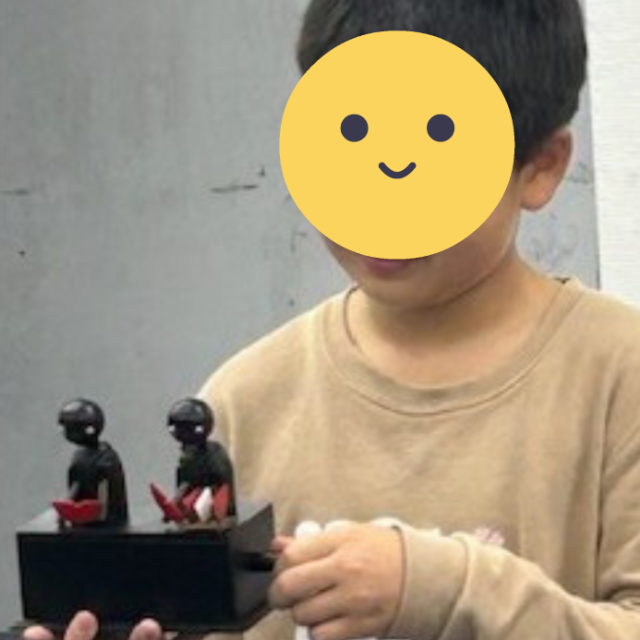 During the program, we introduced a locally preserved traditional karakuri toy known as the “Kobe Doll.” A young elementary school participant came to the front and performed a demonstration for everyone. In this humorous performance, two black ghost-like figures slice a watermelon in half with a knife and then open their mouths wide to eat it. Laughter spread throughout the room as everyone enjoyed the playful movement.
It was then explained that the mechanism of this doll is powered by only a rotating shaft and strings, not gears. Participants expressed surprise at how such a simple mechanism could create such expressive motion. This comparison with our wind-up gear craft helped us recognize both the differences and a shared culture of “enjoying complex movement created from simple mechanisms.”
Sharing and Presentation Session
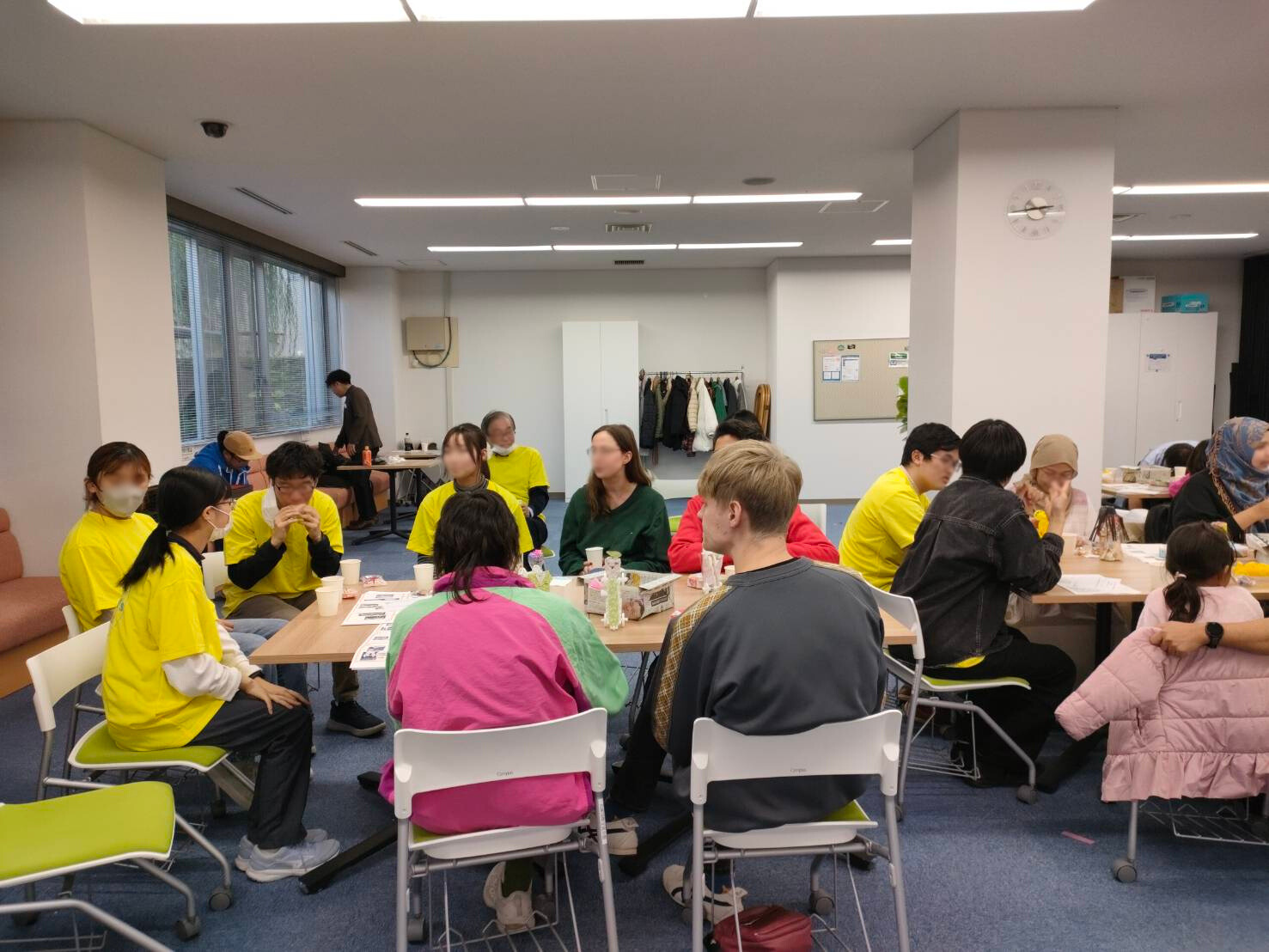
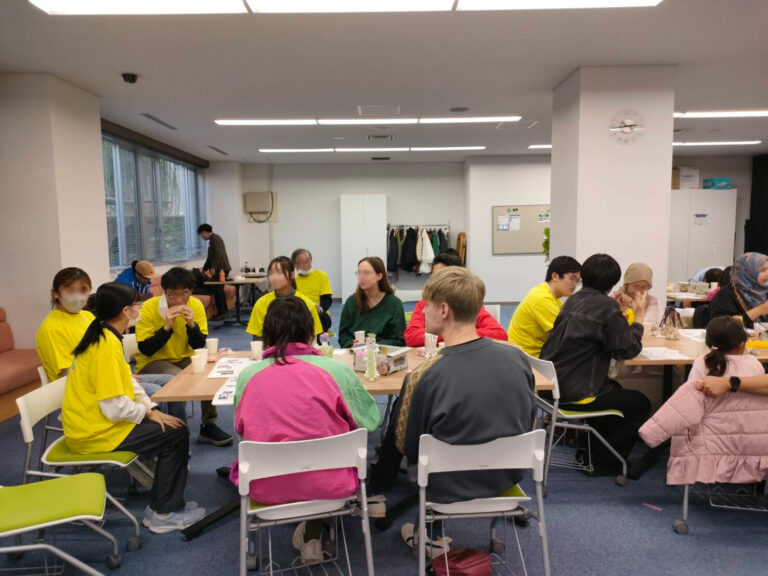
After completing their projects, participants gathered at each table to share and enjoy the creativity expressed in their handmade mechanical vehicles. The wide variety of designs and decorations led to comments such as, “Everyone should get to see these!”
In response, we spontaneously held a mini presentation session where each participant presented their own creation one by one.
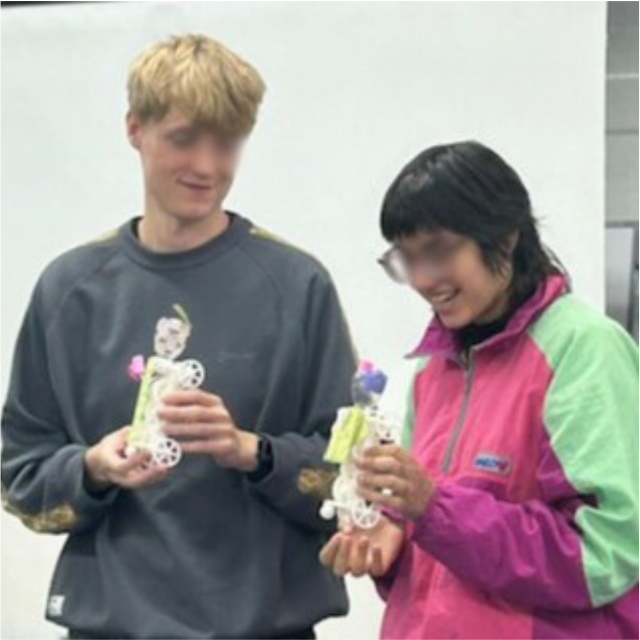 Participants explained what they had designed, the colors and patterns they chose, and how they personalized their work. Applause arose naturally as they appreciated one another’s ideas, celebrating not only the finished projects but also the creativity and care behind them.
Sharing and Presenting the Finished Works
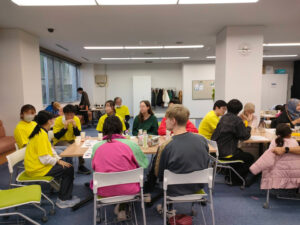
After finishing their cars, participants first shared their作品 at each table. Because so many different designs and decorations had appeared, there were comments such as “It would be a waste to keep these only at each table!” So the group spontaneously decided to hold a mini presentation session, where each participant came to the front and introduced their own work.
As they talked about the points they had devised and the colors and patterns they liked,applause arose naturally in appreciation of one another’s creations. In this way, participants shared not only skills but also an attitude of respecting one another.
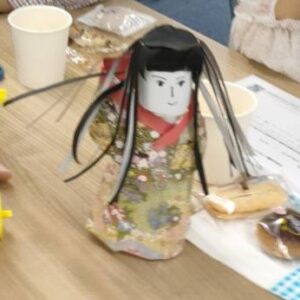 One memorable creation was made by an Indonesian student who works part-time at a kimono rental shop,
learning how to dress customers in kimono and attending to guests from overseas in English.
The kimono dressing skill she uses every day was beautifully reflected in her decoration,
much to the surprise of the Japanese participants,
many of whom had never actually dressed someone in a full kimono themselves.
Gallery of Works
Group Photo, Smiles, and Hopes for the Next Workshop
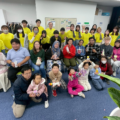
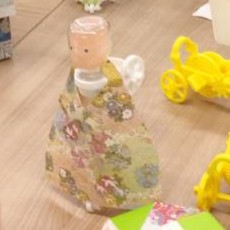
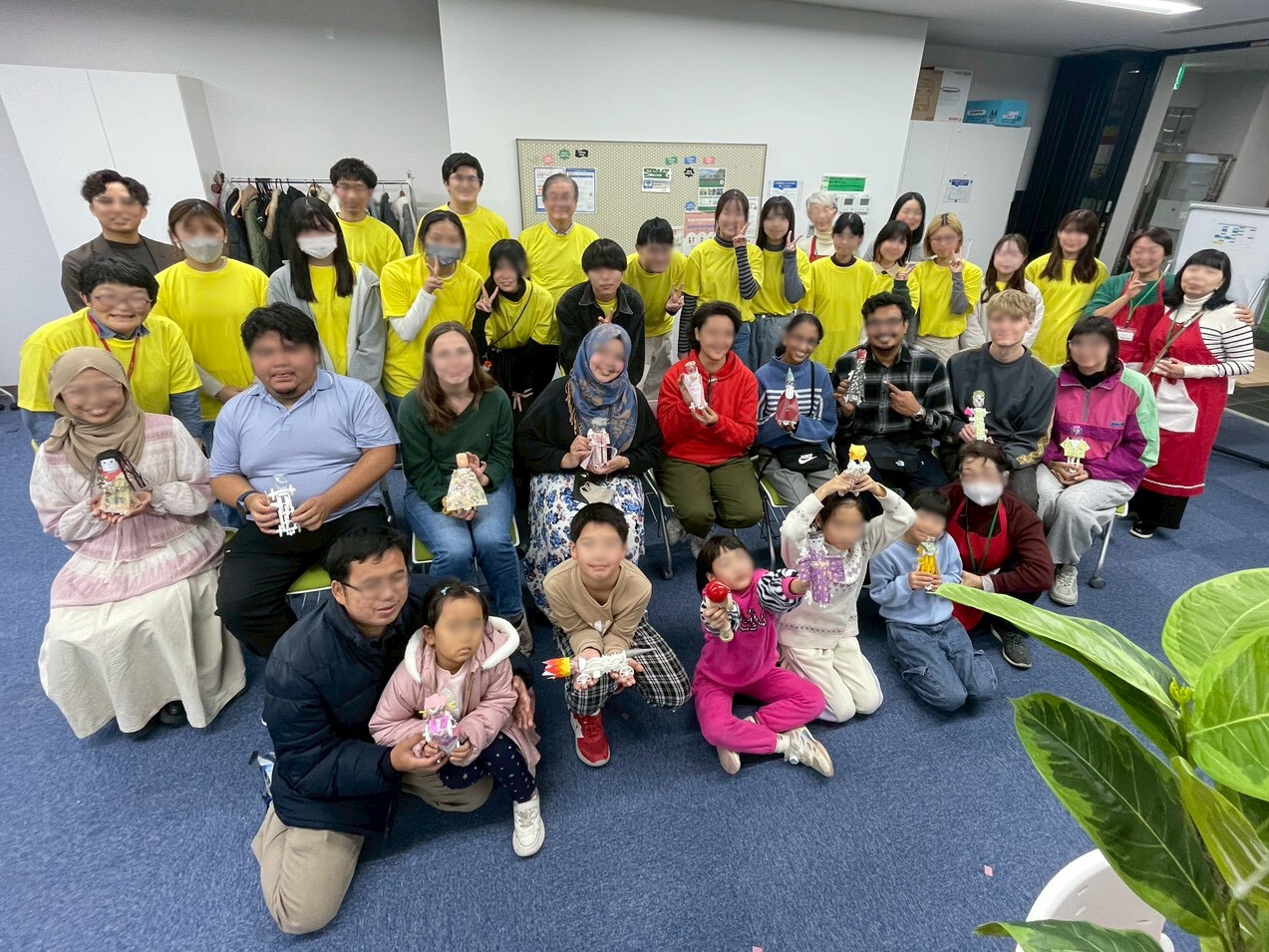 At the end of the workshop, everyone gathered for a group photo, each holding their one-of-a-kind creation. Afterward, participants left the venue with their creations and the small origami boxes they had made for the parts, smiling as they went home.
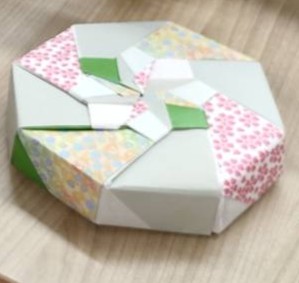 showing how well-received the event was as an opportunity where craftsmanship and culture come together.
Participants’ Countries and Numbers
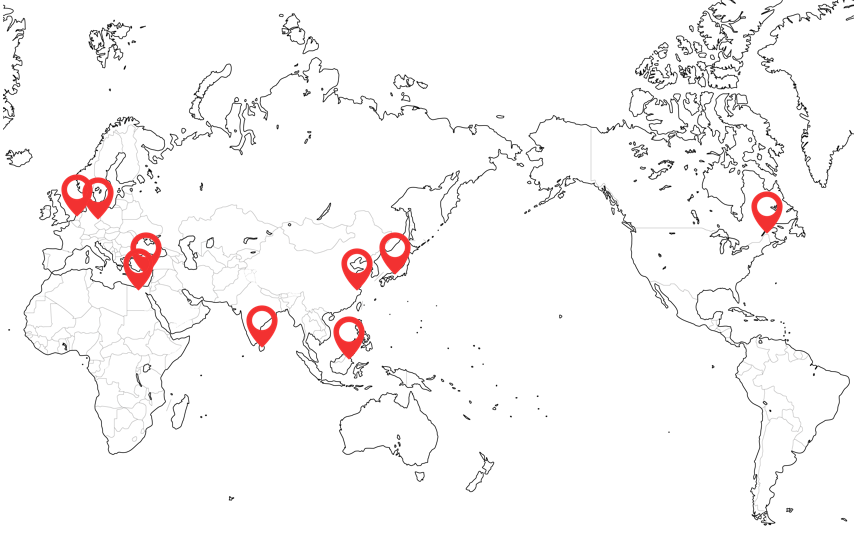
The participants from 9 countries (including 4 children):
- USA: 1
- Germany: 1
- Cyprus: 1
- Netherlands: 1
- Sri Lanka: 3
- Indonesia: 2
- Egypt: 1
- China: 3 (all children)
- Japan: 1 (child)
Event Overview
- Title: Karakuri Craft Workshop – Experiencing Japanese Culture through Karakuri Dolls
- Date & Time: Saturday, December 6, 2025, 13:00–15:00
- Venue: Hyogo International House, 1F Nadacom Station (1-2-8 Wakinohama-cho, Chuo-ku, Kobe)
- Target: International researchers, international students, and their families (4th grade elementary school and above; elementary students accompanied by a guardian)
- Capacity: 10 groups (actual number of participants: 14)
- Participation Fee: Free
- Kit Development: Makers Club Youth Group CYT
-
Co-hosted by: KOKORO-NET in KOBE, Makers Club (NPO) / Youth Group CYT
Supported by: Kobe University Global Education Center